

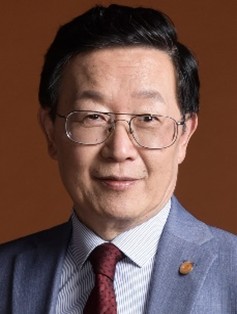
Prof. Yingxu Wang is a Ph.D. supervisor, an A-Class Overseas Expert recognized by the Ministry of Science and Technology of China, an IEEE Fellow, Bayu Chair Professor of Chongqing Municipality, and a Professor Emeritus at the University of Calgary, Canada. He is an internationally renowned scholar in the emerging disciplines of Intelligent Science, Intelligent Mathematics, Autonomous Artificial Intelligence Systems, Cognitive Computers, Software Science, and Brain Science, and currently serves as the Director of the Chongqing Institute of Intelligent Mathematics and Autonomous Intelligence.
Prof. Wang has held visiting professorships at the University of Oxford (1995, 2018–2022), Stanford University (2008, 2016), the University of California, Berkeley (2008), and the Massachusetts Institute of Technology (MIT) (2012). He also served as a Distinguished Visiting Professor at Tsinghua University (2019–2022). His research focuses on autonomous artificial intelligence systems, cognitive computers, intelligent science, intelligent mathematics, software science, and brain science.
He is the Founding President of the International Institute of Cognitive Informatics and Cognitive Computing (I2CICC) and a Fellow of IEEE (FIEEE), the New York Academy of Sciences, the British Computer Society (FBCS), the International Institute of Cognitive Informatics and Cognitive Computing (FI2CICC), the Asia-Pacific Artificial Intelligence Association (FAAIA), the World Innovation Foundation (FWIF), and the Asia Society of Computational Intelligence (FACIS). He also serves as Honorary President of the Hong Kong Robotics and Automation Association, a Member of the IEEE Systems, Man, and Cybernetics (SMC) Society Board of Governors, and has served as Editor-in-Chief or Associate Editor for more than ten international journals and IEEE Transactions.
Prof. Wang has published more than 600 peer-reviewed papers and 38 books and edited volumes. He has formally proved over 100 new scientific and mathematical theorems, delivered more than 100 invited keynote speeches at international conferences, and served as Honorary Chair, General Chair, or Program Chair for over 60 international conferences and workshops.
王迎旭教授,博士生导师,科技部A级海外专家, IEEE会士,重庆市巴渝学者讲座教授,加拿大卡尔加里大学终身教授。智能科学、智能数学、自主人工智能系统、认知计算机、软件科学和脑科学等新兴领域和学科的国际著名学者,重庆智能数学与自主智能研究院院长。
曾在牛津大学(1995、2018-2022)、斯坦福大学(2008、2016)、加州大学伯克利分校(2008)、和麻省理工学院(2012)担任客座教授,在清华大学(2019-2022)担任杰出客座教授。主要从事自主人工智能系统、认知计算机、智能科学、智能数学、软件科学、和脑科学等领域研究。先后担任国际认知信息学和认知计算学会(I2CICC)创始主席,IEEE会士(FIEEE)、New York 科学院院士, 英国计算机学会会士(FBCS)、国际认知信息学和认知计算学会会士(FI2CICC)、亚太人工智能学会会士(FAAIA)、英国世界创新基金会会士(FWIF)、亚州计算智能学会副主席和会士(FACIS)、香港机器人与自动化协会名誉主席、IEEE SMC学会理事,以及10多个国际期刊和IEEE汇刊的主编和副主编等。
先后发表了600多篇同行评议论文和38本书/论文集。曾严格形式证明100+新的科学/数学定理, 100+次受邀在国际会议上发表主题演讲。曾担任60多个国际会议/研讨会的名誉主席、总主席, 或程序主席。
This keynote presents the theoretical foundations of contemporary Intelligent Science (IS) underpinned by fundamental studies in Intelligent Mathematics (IM), It explains how empirical AI technologies will be matured towards IS driven by IM, that leads to the emergence of Autonomous AI (AI*) . Advances in AI* underpinned by IM are revolutionarily transferring AI technologies from empirical training-based big-data engineering to contemporary IS embodied by IM-based machine intelligence generation. The AI* technology works autonomously without the need for pervasive empirical training, because rational proofs about the natural and the mental worlds can’t be merely derived by exhaustive case studies or empirical instances, constrained by their unlimited domains and dynamic constraints. The formal and fundamental studies on IS and IM have led to the revealment of the first axiom of IS and AI, i.e., “The theoretical foundation of AI is IS, while that of IS is IM , shortly: AI_IS_IM. On the basis of the preceding causality, this keynote presents a scientific framework of IS underpinned by IM. The rigorous approach has provided a formal methodology for AI* system design and implementation. AI* and IM will theoretically and empirically improve traditional AI technologies, which are not only constrained by unbounded data scales and exponential complexity, but also their unreasonable training energy/time consumptions.

Prof. Xianjun Deng is a Professor, Doctoral Supervisor, and National High-level Leading Talent at the Huazhong University of Science and Technology (HUST), where he serves as Deputy Dean of the School of Cyber Science and Engineering. He is a recipient of the IEEE SCSTC "Mid-Career Achievement Award", the IEEE TCSC "Outstanding Early Career Researcher" Award, the Hubei Provincial Bairen Plan Scholar, the Wuhan "Wuhan Talent" Award, the Chongqing Bayu Scholar Distinguished Professor, and the Hunan Furong Scholar.
His research focuses on intelligent industrial IoT security, data and content security, artificial intelligence security, and social network security. He has led more than 20 national and provincial-level research projects, including serving as Chief Scientist for one National Key R&D Program project, and Principal Investigator for one NSFC Enterprise Innovation Development Joint Fund (Key Support Project), two NSFC General Programs, one NSFC Young Scientists Fund, six enterprise horizontal development projects, and five Ministry of Education industry-academia collaboration projects. In the past five years, he has published over 100 high-quality research papers in renowned international journals and conferences, including more than 20 CCF A-class journal and conference papers, 44 JCR Q1 journal papers, and 7 ESI Highly Cited Papers. His research has been applied to industrial scenarios such as radioactive pollution monitoring of uranium tailings reservoirs. He serves as Program Committee Chair for international conferences such as the IEEE Smart World Congress, and as a NSFC peer-review expert.
邓贤君,湖南郴州临武人,教授、博士生导师,国家高层次领军人才,华中科技大学网络空间安全学院副院长,湖北省优秀博士学位论文获得者。获IEEE SCSTC"中期职业成就奖"、IEEE TCSC"优秀青年科学家"、湖北省百人计划学者、武汉市"武汉英才"、重庆市巴渝学者特聘教授、湖南省芙蓉学者等荣誉。主要从事智能工业物联网安全、数据与内容安全、人工智能安全、社交网络安全等方面的研究工作,主持国家级和省部级科研项目20多项,包括作为首席科学家牵头主持国家重点研发计划项目1项,作为项目负责人牵头主持国家自然科学基金企业创新发展联合基金(重点支持项目)1项、国家自然科学基金面上项目2项、青年基金项目1项、企业横向开发项目6项、教育部产学合作协同育人项目5项等。近五年在国际著名期刊和会议上发表高档次科研论文100余篇,其中包括CCF A类期刊和会议论文20余篇、中科院JCR一区期刊论文44篇、ESI高被引论文7篇,研究成果应用于铀尾矿库放射性污染监测等工业场景。担任IEEE Smart World Congress等国际会议程序委员会主席,兼任国家自然科学基金通讯评审专家。
As the core information infrastructure of industrial intelligence, the Intelligent Industrial Internet of Things (IIoT) relies on underlying devices to perform real-time sensing, transmission, and computing of long-sequence data under complex operating conditions, so as to support critical tasks such as production control, condition monitoring, and security decision-making. However, underlying industrial devices in dynamic environments are susceptible to factors such as energy depletion, hardware aging, and link fluctuation, which lead to incomplete field information collection and insufficient sensing coverage. Traditional models struggle to adapt to such variable characteristics, thereby giving rise to the problem of unreliable sensing of long-sequence data. Meanwhile, during the cross-layer and cross-region transmission and collaborative computing of long-sequence data, issues of missing values, noise, and anomalies frequently occur, further undermining the computational trustworthiness and security of the Intelligent Industrial IoT.
This report presents a systematic study centered on two main directions: reliable sensing and secure computing of long-sequence data in the Intelligent Industrial IoT. For reliable sensing, a network clustering and sensing-device fault detection strategy based on deep reinforcement learning is proposed to adapt to dynamic industrial environments and improve the energy efficiency and stability of the sensing network; at the same time, a tensorized multivariate multi-order Markov model is constructed to uniformly characterize device state evolution, network coverage, and link reliability, forming a quantifiable reliability evaluation system for long-sequence data sensing. For secure computing, a long-sequence data imputation method based on conditional diffusion models is proposed to effectively mitigate the computational deviation caused by missing data; and an anomaly detection model based on momentum contrastive learning is designed to achieve high-precision trustworthiness evaluation of industrial long-sequence data. Finally, the report provides a forward-looking analysis of future trends in the reliable sensing and secure computing of long-sequence data in the Intelligent Industrial IoT.
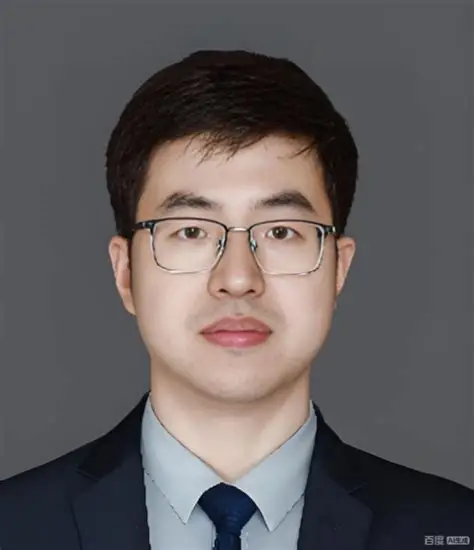
Dr. Wei Ke is a Professor at the School of Software Engineering, Xi'an Jiaotong University. He received his Ph.D. from the University of Chinese Academy of Sciences and his bachelor's degree from Beihang University, and was a postdoctoral researcher at Carnegie Mellon University. His main research interests include multimodal models and their applications in object perception. He has published more than 30 papers in CCF-A conferences and JCR Q1 journals, such as CVPR, ICLR, and TNNLS. He has served as an Area Chair or Senior Program Committee (SPC) member for CCF-A conferences including ICML, AAAI, and ICLR. He has led over 10 projects, including a National Key R&D Program sub-project, an NSFC General Program project, a Central Government-guided Local Science and Technology Development special project, and Huawei projects. He is currently a member of the China Society of Image and Graphics (CSIG) and the China Computer Federation (CCF), and serves as a committee member of the Cognitive and Brain-inspired Computing Technical Committee of the Chinese Society for Cognitive Science.
柯炜,西安交通大学软件学院教授、博士生导师,国家级青年人才。博士毕业于中国科学院大学,本科毕业于北京航空航天大学,曾于卡内基梅隆大学做博士后。主要研究方向为多模态模型及其在目标感知中的应用,已发表CVPR、ICLR、TNNLS等CCF A会议和JCR一区期刊论文30余篇,担任ICML、AAAI、ICLR等CCF-A类会议领域主席或SPC。主持重点研发课题、自然基金面上项目、中央引导地方专项课题、华为众智等项目10余项。现为中国图象图形学会和计算机学会会员,并担任中国认知科学学会认知与类脑计算专委会委员。
With the rapid iteration of image generation models, AIGC images are increasingly approaching real images in terms of visual quality and semantic consistency. The resulting problems, such as the spread of false information and identity fraud, have made generated image detection an important research topic in the field of content security. This talk first introduces the task of AIGC-generated image detection, its application requirements, and research progress. On this basis, focusing on the generalization ability of detectors to unseen generative models, it highlights a generated image detection method based on neighborhood dependency mining. By characterizing the differences in local pixel dependency structures between real imaging and AIGC image generation processes, the method extracts stable discriminative cues that are less dependent on specific generators. The talk also discusses the role of evaluation benchmarks in objectively measuring detector generalization. In view of issues in existing datasets such as insufficient generator coverage, imbalanced semantic distribution, and biases in low-level attributes including resolution and compression format, it introduces the HCP evaluation benchmark covering 16 mainstream generative models and the rationale behind its construction. Finally, the talk summarizes the main conclusions of generated image detection research and outlines future directions for AIGC-generated image detection.
随着图像生成模型快速迭代,AIGC图像在视觉质量和语义一致性上日益逼近真实图像,由此带来的虚假信息传播和身份欺诈等问题,使生成图像检测成为内容安全领域的重要研究课题。本报告首先介绍AIGC生成图像检测任务、应用需求与研究进展。在此基础上,围绕检测器对未知生成模型的泛化能力,重点介绍基于邻域依赖关系挖掘的生成图像检测方法,通过刻画真实成像与AIGC图像生成过程在局部像素依赖结构上的差异,提取对具体生成器依赖较弱的稳定判别线索。报告也将探讨评估基准在客观衡量检测器泛化能力中的作用,针对现有数据集可能存在的生成器覆盖不足、语义分布失衡以及分辨率、压缩格式等底层属性偏差,介绍覆盖16种主流生成模型的HCP评估基准及其构建思路。报告最后总结生成图像检测研究的主要结论,并展望 AIGC 生成图像检测的发展方向。
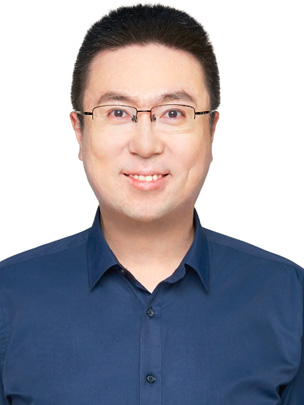
An Wang is a Special Research Fellow and Ph.D. Supervisor at the Beijing Institute of Technology. He serves as a member of the Cryptographic Chip Professional Committee of the China Association for Cryptologic Research (CACR), a review expert for commercial cryptography security of the State Cryptography Administration, and an editorial board member of the Journal of Cryptologic Research. His primary research directions include cryptographic engineering and side-channel attack/defense technologies. He received his Ph.D. in Information Security from the School of Mathematics, Shandong University in 2011, subsequently conducted two post-doctoral research fellowships at Tsinghua University, and joined the School of Computer Science at the Beijing Institute of Technology in 2015.
Dr. Wang has presided over 9 national or provincial-level research projects, including grants from the National Natural Science Foundation of China. He has received the Party and Government Cryptography Science and Technology Progress Award, Best Paper Awards at AsiaJCIS 2018, ChinaCrypt 2015, and CryptoTE 2021, as well as Special and First-Class Grants from the China Postdoctoral Science Foundation. He has published over 70 academic papers.
王安,特别研究员,博士生导师,中国密码学会密码芯片专业委员会委员,国家密码管理局商用密码安全性审查专家组成员,《密码学报》编委,主要研究方向为密码工程与侧信道攻防技术。2011年博士毕业于山东大学数学院信息安全专业,随后进入清华大学从事两站博士后研究工作,2015年进入北京理工大学计算机学院任教至今。主持国家自然科学基金等9项国家级或省部级科研项目,获党政密码科学技术进步奖、AsiaJCIS 2018/ChinaCrypt 2015/CryptoTE 2021最佳论文奖、中国博士后科学基金特等和一等资助,发表学术论文70余篇。